Disposal Blog
Clearing a Flat After a Death in Zurich: Procedure, Deadlines & Costs
A practical guide to flat clearance after a death in Zurich, covering costs, deadlines and common mistakes.
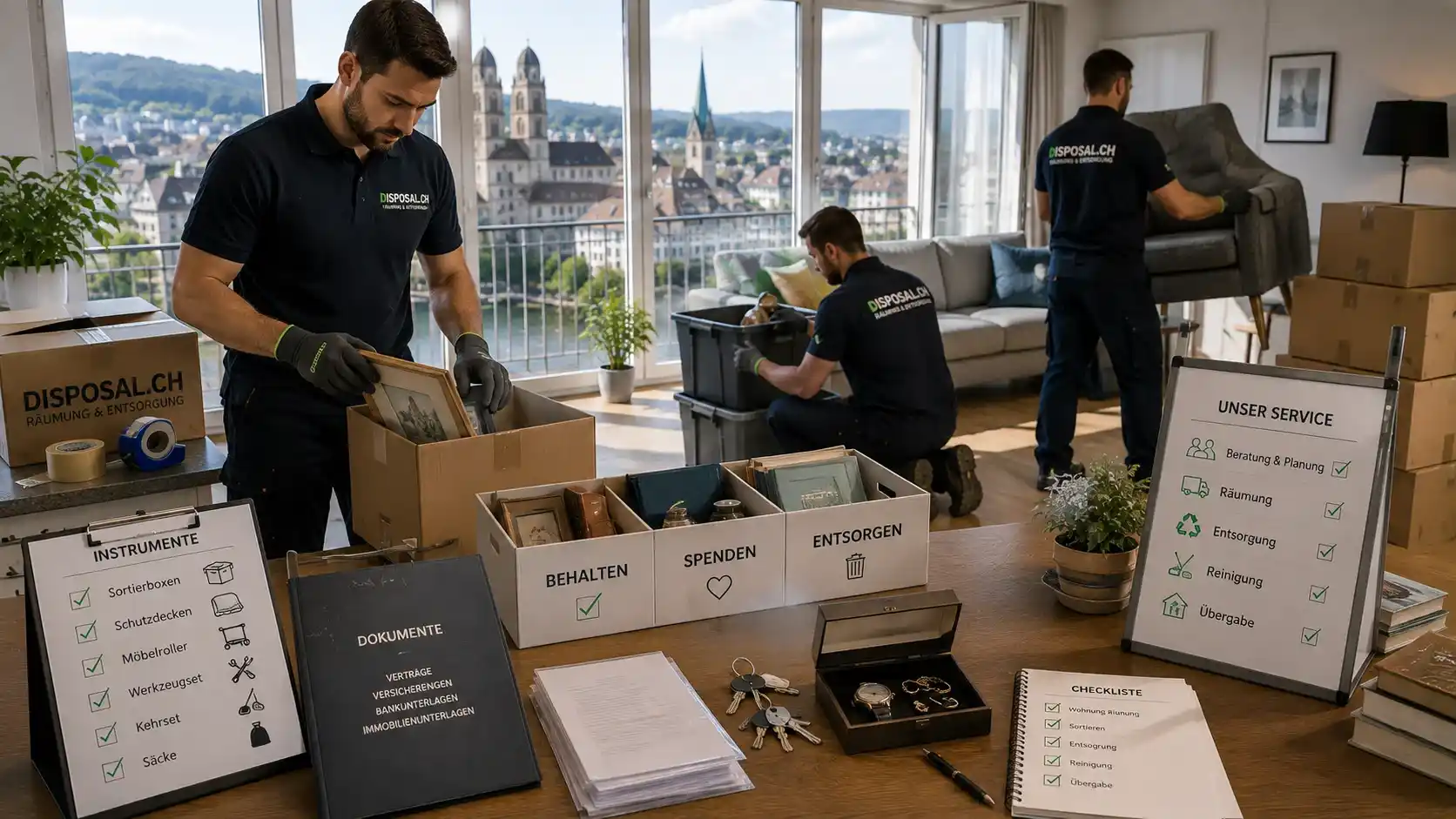
Losing someone close to you is hard enough without also having to navigate lease notices, inheritance law, and a flat full of belongings that suddenly need decisions made about them. If you're reading this because you're facing exactly that in Zurich, take this as a practical, unhurried guide, not a checklist to rush through.
This article covers who is actually responsible for clearing the flat, the legal deadlines that genuinely matter, and a realistic timeline for handling the process. If you need apartment clearance in Zurich, it also explains what it typically costs, how to get help that is both efficient and respectful of what the space represents, and when professional support can make the entire process easier. None of this is legal advice; for anything involving inheritance or a specific lease, a notary or lawyer can confirm the details for your situation.
Who Is Responsible for Clearing the Flat
Under Swiss law, responsibility falls to the heirs (the Erbengemeinschaft), collectively. If there are several heirs, decisions, including who signs a lease termination or authorises a clearance, generally need to be coordinated among all of them. Establishing early who is taking the lead reduces friction later, particularly when belongings, paperwork, and emotions are all involved at once.
The Most Important First Step: Before You Clear Anything
Before any sorting or clearing begins, it's worth pausing on one specific legal risk: if you are still considering whether to accept or renounce the inheritance, clearing the flat or removing items can be treated as tacit acceptance of the inheritance, even unintentionally. If renunciation is a possibility, get legal advice before touching anything.
Separately from that legal question, it's worth securing certain items immediately, regardless of what's later decided about the estate: identity documents, contracts, bank correspondence, keys, photographs, wills, and jewellery. These are exactly the items most often lost by accident in the rush of a clearance, misplaced among books or newspapers rather than deliberately discarded.
The Lease Doesn't End Automatically
A common misunderstanding is assuming a rental agreement simply ends when the tenant dies. It doesn't. The lease passes to the heirs, along with its rights and obligations, meaning rent continues to accrue until it's properly terminated.
Under Article 266i of the Swiss Code of Obligations (OR), heirs have a special right to terminate the lease early, respecting the statutory notice period, typically three months, to the next legally recognised termination date, even if the original contract specified a longer minimum term. The termination must be in writing, accompanied by a death certificate, and signed by all legal heirs. If the flat is owned rather than rented, there's no equivalent notice-period pressure, though a timely clearance is often still practical, particularly ahead of a sale.
Key Takeaway
Notifying the landlord promptly and terminating correctly under Article 266i OR is the single most effective way to stop unnecessary rent from accumulating during an already difficult time.
A Realistic Timeline
|
Timing |
What Typically Happens |
|
First days |
Secure identity documents, keys, contracts, and valuables; notify the landlord of the death as soon as possible |
|
Within 1–2 weeks |
Clarify who among the heirs is coordinating; take legal advice if inheritance renunciation is a possibility. |
|
Within 2–4 weeks |
Confirm lease termination in writing under Article 266i OR, with a death certificate and all heirs' signatures. |
|
Following weeks |
Sort belongings for keepsakes, donation, and disposal; book a clearance date, or a temporary storage solution if the estate isn't yet settled |
|
Before the notice period ends |
Complete the clearance and hand the flat back in the agreed condition, often besenrein (broom-clean) |
What It Typically Costs
A standard estate clearance (Nachlassräumung) for a 3-room Zurich flat typically runs CHF 900 to 1,800, though basement contents, condition, and access can move that figure, as covered in our full Zurich clearance price overview. These costs, along with any remaining rent, are generally paid from the estate itself, though heirs can agree on a different arrangement if that suits their situation.
The cost of delay is worth naming plainly: on an average Zurich three-room rent of around CHF 1,800 a month, three months of inaction can mean roughly CHF 5,400 in additional rent, on top of the clearance itself. Acting promptly, even while still grieving, genuinely protects the estate financially.
The Emotional Side, Honestly
Sorting through a parent's, partner's, or sibling's belongings is rarely just logistics. It's common to want more time than a notice period allows, to disagree with other family members about what should be kept, or to find the whole process harder than expected. There's no need to power through it alone or all at once; a self-storage arrangement for undecided items between clearance and final estate settlement is a genuinely reasonable middle ground, not a failure to "finish properly."
When Professional Help Makes Sense
A discreet, respectful clearance service can take the physical and logistical weight off your shoulders while you focus on family, paperwork, or simply having time to grieve. With disposal.ch, a photo sent on WhatsApp gets a fixed-price quote within the hour, and collection can often happen same-day or next-day, including express turnaround if a notice period is closing in. Our team sorts belongings for donation, recycling, or disposal with care, and can coordinate directly with family members if several people are involved in decisions. For situations involving years of accumulated belongings or a particularly full flat, or basement contents that also need clearing, the same fixed-price approach applies.
A Real-World Scenario
A family coordinating from two different cantons agrees by phone who will sign the lease termination, then books a single fixed-price clearance date once the notice period is confirmed, with keepsakes set aside in advance and the rest handled in one visit, without needing everyone physically present.
Conclusion
Clearing a flat after a death in Zurich involves genuine legal deadlines, most importantly the lease termination under Article 266i OR, alongside a process that deserves patience rather than speed for its own sake. If you need apartment clearance in Zurich, securing documents and valuables first, confirming who is responsible for the decision, and terminating the lease promptly protects the estate financially, while a professional, respectful clearance can handle the physical work whenever you're ready for it.
If it would help to have this part handled with care, send us a photo on WhatsApp, and we'll confirm a fixed price within the hour, on your timeline. Get in touch here.
Frequently Asked Questions
Does a rental lease end automatically when someone dies?
No. The lease passes to the heirs, who remain liable for rent until it's properly terminated, typically with three months' notice to the next legal term under Article 266i OR.
Can I start clearing the flat right away?
If you might renounce the inheritance, get legal advice first; clearing or removing items can be treated as tacit acceptance. Otherwise, securing documents and valuables early is sensible, with the fuller clearance following once responsibilities are clear.
Who has to sign the lease termination?
All legal heirs generally need to sign, alongside a death certificate, for the termination to be valid.
How much does a typical estate clearance cost in Zurich?
A 3-room flat typically costs CHF 900 to 1,800, with basement contents, condition, and access affecting the final figure.
What if the heirs disagree about what to keep?
Taking a temporary storage option for undecided items, rather than deciding everything under time pressure, is a common and reasonable approach while family members reach agreement.
