Disposal Blog
Asbestos in Old Furniture or Flooring: What to Do If You Suspect It
Suspected asbestos in old flooring or furniture can be risky. Learn what to check, avoid and who to contact.
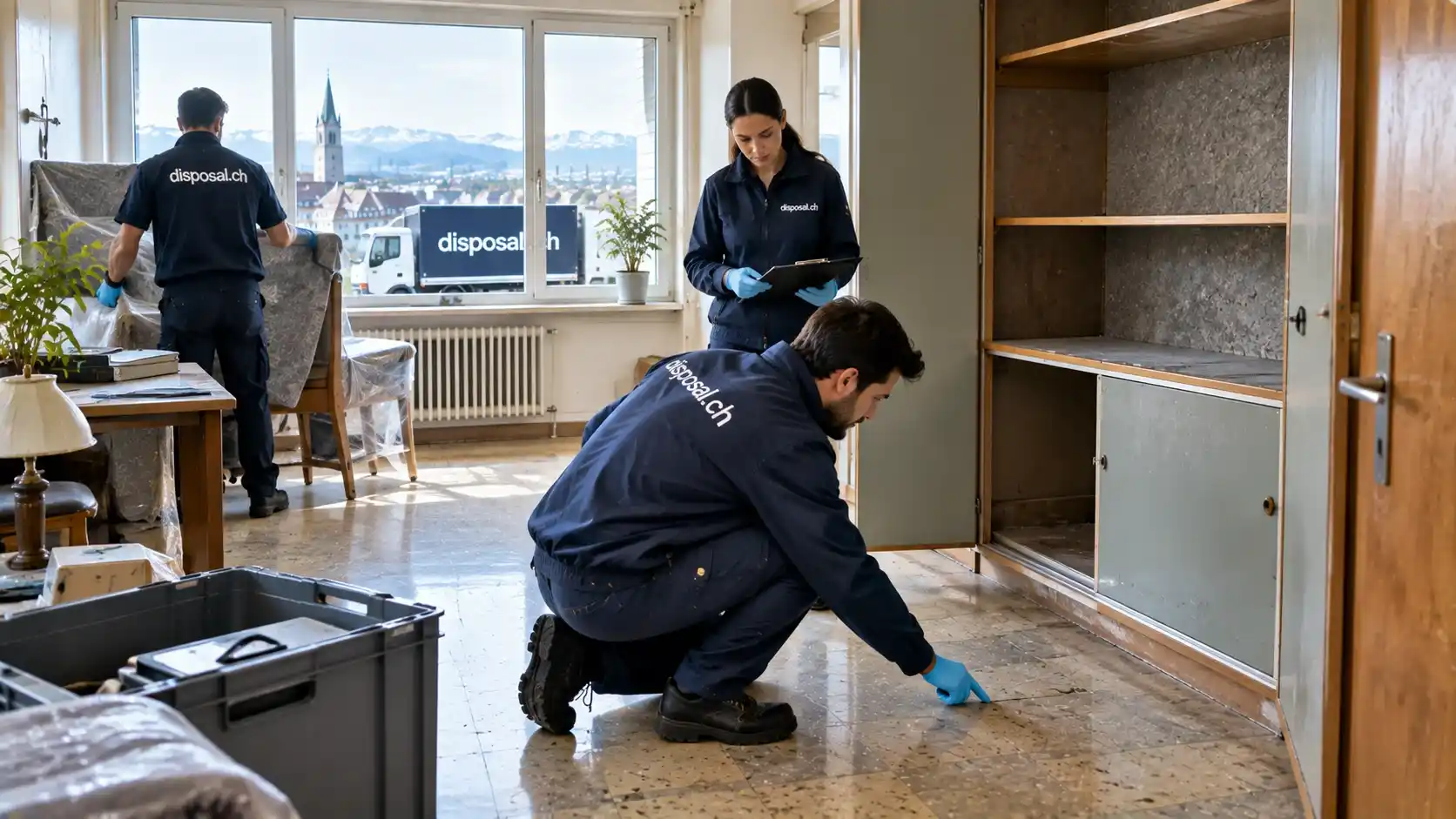
Finding a brittle, oddly cracking PVC floor tile or an old cardboard-backed vinyl sheet during a clearance is unsettling, especially once the word "asbestos" crosses your mind. The good news first: suspecting asbestos is not the same as being in immediate danger. The way you handle the next few steps, however, genuinely matters.
This guide explains why asbestos still turns up in older Zurich properties, the visual clues that warrant caution, the crucial difference between intact and disturbed material, exactly what not to do, and the correct process for getting it properly checked. If you need disposal services in Zurich, it also explains how to proceed safely when asbestos-containing materials need to be removed.
Why Asbestos Still Shows Up in Old Buildings
Switzerland banned asbestos in 1990, which means almost anything built, floored, or furnished before that date, and sometimes slightly after during the transition, can potentially contain it. This is exactly why the material surfaces so often during estate clearances, basement clear-outs, and renovations of older flats.
Where It's Most Likely to Be Found
• Cushion-vinyl sheet flooring: patterned PVC sheet flooring common in older flats, with a thin cardboard-like backing layer that can be almost entirely asbestos
• Square PVC floor tiles: widely installed in the past, often containing roughly 15 percent asbestos, and noticeably brittle, tending to crack with an audible snap when bent rather than flexing
• Older adhesives used under flooring, sometimes asbestos-containing even when the flooring itself has since been replaced
• Built-in furniture panels or cupboard backing made from older fibre-cement board (Eternit-type material) in some pre-1990 fitted furniture
Key Takeaway
A visual match to these descriptions is a reason for caution, not proof. Confirming asbestos content genuinely requires a lab-tested sample, never a guess based on appearance alone.
Is It Actually Dangerous?
This is the detail that gets lost in most online scare stories: intact, undisturbed asbestos-containing material does not pose a health risk simply by being present. Fibres are only released into the air when the material is mechanically disturbed, cut, drilled, sanded, broken, or forcibly removed. A cracked floor tile sitting quietly under a rug is a very different situation from the same tile being sanded down or ripped up.
What NOT to Do If You Suspect Asbestos
• Don't sand, drill, cut, or grind the material under any circumstances
• Don't try to pry up or break suspected flooring or panels yourself
• Don't vacuum debris or dust from the area with a household vacuum
• Don't put suspected material out with ordinary Sperrgut or household waste
• Don't attempt encapsulation or repair yourself; this work is legally restricted to recognised specialists in Switzerland
What to Do Instead
• Leave the material undisturbed and avoid the area if it's damaged or crumbling
• Contact a qualified diagnostician to take a proper sample for laboratory testing; the FACH (Forum Asbest Schweiz) address database lists recognised testing services
• If asbestos is confirmed, contact a Suva-recognised asbestos remediation firm, since Swiss law restricts remediation work involving significant fibre release to officially recognised companies only
• For larger remediation jobs, the specialist firm handles the required advance notification to Suva, generally at least 14 days before work begins
The Legal Framework in Brief
Since 2009, Switzerland's Bauarbeitenverordnung (BauAV) has required an investigation duty before renovation or demolition work that could disturb hazardous materials, covering asbestos alongside other pollutants. There's no legal obligation to remove asbestos that is fully intact and properly encapsulated, but damaged material needs prompt, professional attention rather than being left indefinitely or handled informally.
Where disposal.ch Fits In
To be transparent: asbestos-suspected material is excluded from our standard collection and disposal service, alongside other hazardous items like chemicals and Sonderabfall, exactly in line with Swiss regulations restricting this work to Suva-recognised specialists. What we can do is handle the rest of an apartment clearance or carpet and flooring removal around a suspected area, working alongside the specialist firm handling the asbestos itself, so the rest of the property still gets cleared on schedule.
|
Situation |
Who Handles It |
|
Ordinary furniture, carpets, and household clearance |
disposal.ch, fixed-price, same-day or next-day |
|
Suspected or confirmed asbestos-containing material |
A Suva-recognised asbestos remediation specialist |
|
Sampling and lab testing to confirm asbestos content |
A qualified diagnostician, listed via FACH |
A Real-World Scenario
During an estate clearance, a family notices unusually brittle floor tiles under an old carpet. Rather than removing them, they leave the area undisturbed, arrange testing through a recognised diagnostician, and book disposal.ch to clear the rest of the flat around the isolated area while the specialist firm handles the flooring separately.
Conclusion
Suspected asbestos in old flooring or furniture is common in Zurich properties built before 1990, and it's genuinely manageable once the right process is followed: leave it undisturbed, get it professionally tested, and if confirmed, bring in a Suva-recognised specialist for removal. A general clearance company can safely work around a suspected area, but the material itself needs licensed handling, not a DIY approach or a standard Sperrgut collection.
For everything else in your clearance, get a fixed-price quote today, send us a photo on WhatsApp and we'll confirm your price within the hour. Book your fixed-price pickup here.
Frequently Asked Questions
Is it dangerous to have asbestos flooring in my home if it's not damaged?
No, not in itself. Intact, undisturbed asbestos-containing material doesn't release fibres into the air. The risk arises specifically when it's cut, drilled, sanded, or broken.
How can I tell if my old flooring contains asbestos?
Brittle PVC tiles that crack audibly when bent, and cushion-vinyl sheet flooring with a thin cardboard-like backing, are common warning signs, but only a lab-tested sample can confirm it.
Can I remove suspected asbestos flooring myself?
No. Removal work involving significant fibre release is legally restricted to Suva-recognised remediation firms in Switzerland.
Will disposal.ch remove asbestos-containing material?
No. Asbestos-suspected material is excluded from our standard service, in line with Swiss regulation, but we can clear the rest of a property around it and coordinate timing with a specialist firm.
Who tests whether material actually contains asbestos?
A qualified diagnostician takes a sample for laboratory analysis. The FACH (Forum Asbest Schweiz) address database lists recognised testing services.
